
Main Sewer Line Repair in Frisco, Texas and Surrounding Cities
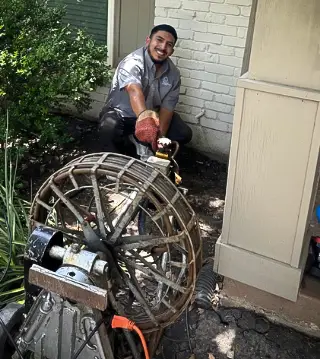
When your main sewer line goes bad, the whole house feels it. Slow drains, sewage backing up, foul smells, toilets that gurgle for no reason, soggy spots in the yard: any one of those can point to trouble running underground.
Our plumbers at GPS Plumbing diagnose and repair mainline sewer problems across Frisco, Plano, McKinney, Allen, Prosper, Celina, Little Elm, and The Colony. Whether the break sits under your slab or out in the yard, we track down the failure and tell you straight what it will take to fix it.
Understanding What Is Happening Below Your Home
A failing sewer line almost always has a root cause behind it. Around North Texas, the usual suspects are foundation movement, expansive clay soil, aging pipes, sloppy installation, and the everyday stress that builds up on plumbing buried under a house.
Knowing why the line failed shapes the whole repair. Clearing a drain might get water moving again for a while, but it does nothing for a pipe that has cracked, pulled apart, collapsed, or simply worn out.
Below, we walk through how these problems start, how we pin them down, the repair options on the table, and what you can expect if it happens at your place.
What Is a Mainline Sewer Problem?
Your main sewer line is the pipe that carries everything draining out of your toilets, sinks, tubs, showers, and washing machine to the city connection.
Damage it, block it, pull it apart, or collapse it, and you are not looking at one bad drain. You could lose several fixtures, or every drain in the house at once.
A clog in a single sink or toilet stays close to the surface. A mainline problem sits deeper in the system, and getting to it can call for testing, a camera inspection, excavation, tunneling, and either a pipe repair or a full replacement.
Warning Signs of a Main Sewer Line Problem
The tell with a mainline issue is that it shows up all over the house, not at one lonely fixture. Call a plumber if you spot any of these:
- Several drains slowing down at the same time
- Toilets bubbling or gurgling when another fixture runs
- Water backing up into a bathtub or shower
- Stoppages that keep coming back after the line has been cleared
- Sewer odors inside the home or around the foundation
- Wet, soft, or unusually green patches in the yard with no clear reason
- Drainage trouble that started after foundation repair or leveling
- Sewage showing up around an exterior cleanout
One slow drain on its own is probably a local clog. Once several fixtures start acting up together, it is time to look at the main line.
Common Causes of Mainline Sewer Damage
Around here, mainline trouble usually traces back to one of these:
- Foundation movement shifting the pipe underground
- Expansive clay soil pressing on the sewer line
- Pipe pulling apart at a fitting or joint
- Aging, corroded, or deteriorating piping
- Poor installation or thin trench bedding
- Earlier repairs that were not done right
- Tree roots working into exterior lines
- Construction debris or foreign material stuck inside the pipe
Foundation work is one of the biggest culprits in this part of Texas. When a house shifts, settles, or gets lifted during leveling, the rigid pipe running under the slab can separate, crack, or shear right at the fittings.
Types of Sewer Pipes We Repair
Different homes were built with different piping, and each material fails in its own way. Knowing what you have helps us decide whether a spot fix will do or the whole run needs to go.
- Cast Iron: Common in older homes. Over the years it corrodes from the inside, building up rough scale, thinning out, and cracking or rotting along the bottom of the pipe.
- Clay Pipe: Still in the ground in some older North Texas neighborhoods. Soil movement cracks it, and tree roots love to sneak in wherever two sections meet.
- PVC and ABS: Modern plastic piping shrugs off rust and corrosion, but it can still crack, separate, take on a bad joint, or shear when the foundation moves.
- Orangeburg Pipe: A fiber-based pipe you will find in some mid-century homes. It soaks up moisture, warps, flattens, and eventually caves in under the weight of the soil. Replacing it is almost always the real fix.
Mainline Sewer Repair vs. Drain Clearing
Clearing a sewer line and repairing one are two different jobs.
Clearing pulls out the grease, roots, paper, and gunk choking the flow. If the pipe underneath is still solid, that might be all you need.
Once the line is cracked, pulled apart, collapsed, badly corroded, or sloped wrong, clearing the blockage leaves the real problem sitting right where it was. The symptoms come back.
A repair goes after the damaged pipe itself. Depending on what shape the system is in, that can mean:
- Replacing a broken section of pipe
- Reconnecting separated joints
- Removing a collapsed or deteriorated section
- Installing new piping beneath or around the home
- Rerouting the line when the existing path no longer makes sense
That is the line between getting things flowing for now and actually fixing what broke.
Spot Repair vs. Full Sewer Line Replacement
A damaged line does not automatically mean a full replacement. What we recommend comes down to how many failures there are, what the pipe is made of, the shape of the rest of the line, and whether anyone has patched it before.
When a Spot Repair May Be Appropriate
A spot repair is often the smart move when:
- Camera inspection shows one isolated structural defect
- The rest of the sewer line is in sound condition
- The problem is limited to a specific fitting, joint, or short section
- The line has not failed repeatedly in other spots
When Full Replacement May Be Recommended
Replacing more of the line tends to pay off when:
- Multiple breaks turn up along the line
- Cast iron has deteriorated throughout the system
- Clay pipe is cracked or separated in several places
- The line has significant bellies, offsets, or collapsed sections
- Earlier spot repairs have failed or new failures keep appearing
How We Diagnose the Problem
No digging starts until we know exactly what broke and where. Getting the diagnosis right keeps us from tearing up ground we do not need to touch and puts the work where it belongs.
Depending on your symptoms and your property, that can involve:
- Sewer Camera Inspection: We run a camera through the line to spot obstructions, cracks, offsets, separated joints, root intrusion, corrosion, or a collapsed section.
- Hydrostatic Testing: We seal off the drainage system and fill it with water to see whether a leak is running under the slab.
- Electronic Line Locating: Locating gear maps the route, depth, and position of the pipe along with the damage we found.
- Smoke Testing: We push non-toxic smoke through the system to reveal sewer gas leaks, bad vent lines, or hidden openings.
- Physical Inspection: We check the exterior cleanouts, how the property drains, the condition of the foundation, any past repairs, and whatever else the site is telling us.
Whenever we can, we show you what we found on camera and lay out your options in plain language.
Mainline Sewer Repair Options in Frisco, TX
No two homes are the same. The right method depends on where the damage sits, how much pipe has failed, how deep the line runs, and whether the trouble is under the foundation or out in the yard.
- Yard Excavation: When the break is outside the house, we trench straight to it. Electronic locating keeps the digging tight to the spot that actually failed.
- Under-Slab Tunneling: When the break is under the house, tunneling lets us reach it from outside so your tile, hardwood, and concrete floors stay intact.
- Spot Repair: We cut out a short bad section and replace it when the rest of the line still checks out.
- Line Replacement: When failures show up in several places or the pipe is worn out across the board, we replace a long stretch or the whole line.
- Sewer Rerouting: When fixing the existing under-slab route is not worth it, we abandon the old line and run a new one around the outside of the house.
Real Example: Sewer Line Failure After Foundation Work in Frisco, TX
A Frisco homeowner called us after foundation leveling left them with drainage problems that kept coming back. Our testing confirmed a live sewer leak under the slab.
We ran a camera and used electronic locating to pinpoint the damage before anyone touched a shovel. Once we opened up access, we found several damaged sections under the home.
We pulled the failed piping, installed new connections, and tested the system again before closing everything back up.
Failures like this show up all the time in North Texas after a foundation moves, lifts, settles, or the soil shifts hard.
What to Expect During a Main Sewer Line Repair
A mainline repair sounds like a lot, and it can be, but most jobs move through the same steady sequence from the first look to the final test.
- Symptom Evaluation: We talk through what is draining wrong, when it started, and whether the house has seen foundation work or earlier sewer repairs.
- Inspection and Testing: A camera, hydrostatic test, smoke test, or line locating helps us nail down what failed and where.
- Repair Recommendations: We show you what we found and go over the repair options that make sense for your property.
- Permitting and Scheduling: If the city requires permits or inspections, we handle those before the structural work starts.
- Accessing the Pipe: We reach the damage through targeted yard excavation, under-slab tunneling, or whatever access method fits.
- Repair or Replacement: Broken, separated, or worn-out piping comes out and gets replaced as needed.
- Post-Repair Testing: We test the system again to confirm the repaired line is sealed and moving water the way it should.
- Backfill and Restoration: We put the soil back and restore the work area as close to its original shape as we reasonably can.
Start to finish, you should know what we are doing, why it matters, and what the repair is meant to fix.
What Makes Mainline Sewer Repairs Different?
This is not surface-level plumbing. Mainline work deals with buried systems shaped by soil movement, foundation conditions, pipe material, how well it was installed, and decades of daily use.
In North Texas towns like Frisco, Plano, McKinney, and Allen, all of that makes a solid diagnosis non-negotiable. Guessing, or clearing the same line over and over without ever looking inside it, only buys you more backups, property damage, and a bigger bill down the road.
A real repair starts with knowing:
- Where the failure happened
- Why the pipe failed
- How much of the system is affected
- Whether the remaining line is structurally sound
- Which repair method offers the most reliable long-term result
Why Mainline Sewer Repairs Are Common in North Texas
Frisco, Plano, McKinney, Allen, and the towns around them sit on heavy expansive clay. Soak it with rain and it swells. Bake it in a dry Texas summer and it shrinks and pulls away.
That constant swell-and-shrink cycle keeps foundations moving with the seasons. Every time the slab shifts, the rigid pipe running under and around your home takes on pressure, pulling, compression, and shearing it was never built to fight forever.
Give it enough time and you get:
- Cracked fittings
- Separated pipe joints
- Offset sewer lines
- Broken connections beneath the slab
- Pipe bellies that hold water and waste
- Sub-slab leaks that keep returning
Even fairly new plumbing can give out if the foundation moves enough or the pipe went in without solid support and bedding underneath it.
Can a Broken Sewer Line Cause Sewer Odors?
Yes. A broken line lets sewer gas seep out under the home, around the foundation, behind walls, or through any gap in the drainage system.
Plenty of other things cause a sewer smell too: a dried-out drain trap, cracked vent piping, a loose cleanout cap, a failed toilet seal. When the odor sticks around and comes paired with slow drains, backups, foundation movement, or wet spots in the yard, a damaged main line moves to the top of the list.
A camera inspection, smoke test, or hydrostatic test can track down where it is really coming from.
Why Hiring a Licensed and Insured Plumber Matters
Mainline repair is a long way from a simple drain cleaning. It can pull in excavation, tunneling, structural calls, city permits, inspections, and installation that has to meet code.
Hiring a licensed, insured plumber helps make sure:
- The problem gets properly diagnosed before any excavation begins
- The right repair method gets chosen
- Replacement piping goes in according to the applicable plumbing requirements
- Required permits and inspections are handled
- The finished work is tested before access areas close back up
- Someone stands behind the repair