

Why Did My Water Pressure Suddenly Drop
A sudden drop in water pressure is not just an inconvenience, it is often an early indicator that a critical component in your plumbing system is beginning to fail.
In North Texas homes, including Frisco, Plano, McKinney, Prosper, Allen, Celina, Little Elm, and The Colony, the most common cause of whole-home pressure loss is a failing Pressure Reducing Valve (PRV).
Understanding the cause and addressing it correctly helps protect your home from long-term plumbing damage.
What Does a Pressure Reducing Valve (PRV) Do?
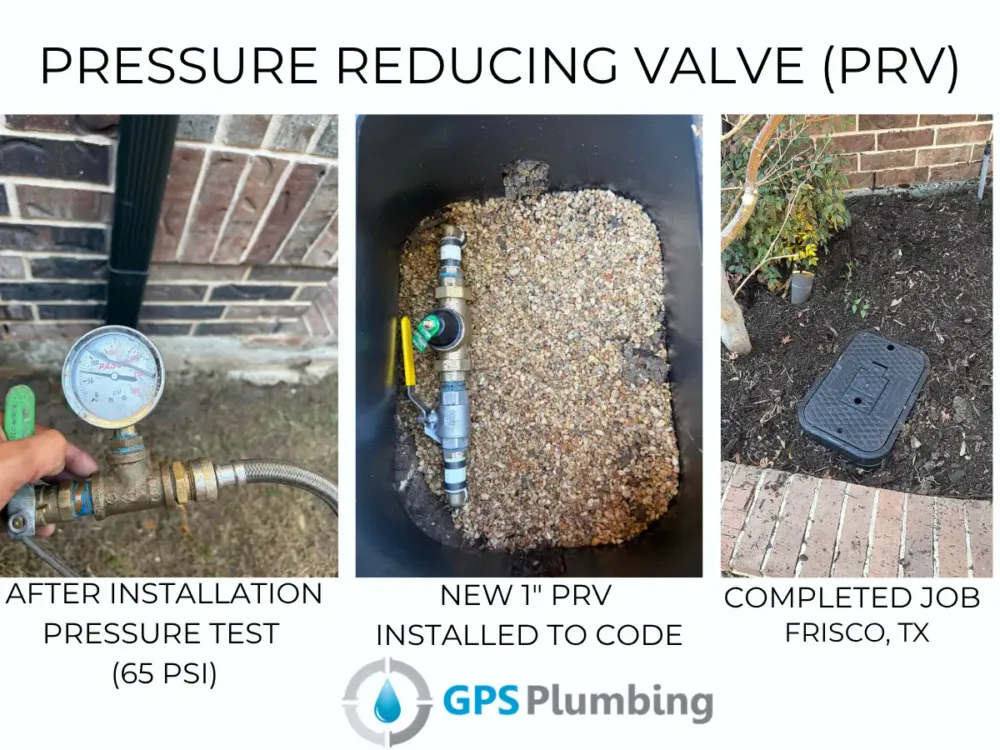
A Pressure Reducing Valve (PRV) is installed on the main water line as it enters your home. Its purpose is to regulate incoming municipal water pressure to a safe and consistent level.
Across many North Texas communities, including Frisco and areas west of the Dallas North Tollway, incoming water pressure frequently exceeds safe residential limits. Without proper regulation, high pressure can damage pipes, fixtures, water heaters, and appliances.
A properly functioning PRV reduces incoming pressure to a safe range, typically between 50–75 PSI, while maintaining consistent performance throughout the home.
Common Causes of a Sudden Drop in Water Pressure
Failing Pressure Reducing Valve (PRV)
In homes throughout Frisco, McKinney, Plano, and Little Elm, PRV failure is one of the most frequent causes of sudden pressure loss.
As the valve wears internally, it can:
- Restrict water flow entering the home
- Cause pressure loss when multiple fixtures are in use
- Create inconsistent or fluctuating pressure
Hidden Water Leak
A drop in pressure may indicate water is escaping somewhere in the system.
Common signs include:
- Increased water bill
- Wet areas in the yard or around the foundation
- Sound of running water when no fixtures are in use
Slab leaks are particularly common in North Texas due to expansive clay soil conditions.
Mineral Buildup from Hard Water
Hard water conditions in cities such as Plano, Prosper, and Celina can lead to mineral buildup inside pipes and fixtures, restricting water flow over time.
Fixture or Valve Failure
If the issue is isolated to a specific area, it is often due to:
- Worn faucet cartridges
- Clogged aerators
- Failing shower valves
Municipal Water Supply Changes
Temporary pressure fluctuations can occur during city maintenance or water main repairs. If nearby homes in areas like The Colony or McKinney are experiencing similar issues, the source may be external.
What Does It Cost to Fix Low Water Pressure in Frisco and Surrounding Areas?
The cost to correct low water pressure depends on the underlying cause, installation conditions, and the size of the incoming water service line.
In many North Texas homes, particularly in Frisco, Prosper, and McKinney, PRVs are located in the front flowerbed and require excavation in clay soil conditions.
For a properly installed PRV on a 1-inch service line built to current plumbing code, homeowners should expect pricing in the thousand-dollar range. Costs vary based on depth, accessibility, soil conditions, and whether additional components such as shut-off valves require replacement.
Key factors that influence cost include:
- Depth of the water line
- Soil conditions, clay versus loose soil
- Accessibility and obstructions
- Pipe size, three-quarter inch, one inch, or larger
- Condition of existing valves and connections
Proper sizing is essential. Homes with larger service lines require appropriately sized PRVs to maintain consistent pressure and flow.
Why PRVs Are Replaced, Not Repaired
Pressure Reducing Valves are not designed to be rebuilt in most residential applications.
As the first point where water enters your home, the PRV absorbs constant high pressure from the municipal supply. In North Texas, this pressure is often elevated, increasing wear on internal components.
Most PRVs are installed outdoors, exposing them to:
- Extreme heat and temperature changes
- Soil movement
- Moisture and environmental wear
Over time, internal components degrade and lose the ability to regulate pressure reliably. For this reason, replacement is the most dependable and code-compliant solution.
What Homeowners in North Texas Should Know
A failing PRV is rarely an isolated issue. It is typically the result of long-term exposure to high incoming pressure and environmental conditions.
Homes in Frisco, Plano, McKinney, and surrounding areas benefit from:
- Properly sized PRVs
- Installation that meets current plumbing code
- Evaluation of overall system pressure
Addressing the issue correctly the first time helps prevent repeat failures and protects the plumbing system.
Where Is the PRV Located?
In North Texas homes, PRVs are typically located:
- In the front flowerbed near the main water line entry, common in Frisco, McKinney, and Little Elm
- Inside the garage behind an access panel, more common in newer homes in Prosper and Celina
When Should You Take Action?
Homeowners should schedule an evaluation if they notice:
- A sudden drop in pressure throughout the home
- Pressure loss when multiple fixtures are in use
- Fluctuating pressure
- Signs of a water leak
Prompt evaluation helps prevent further damage.
What Is the Correct Fix?
The appropriate solution depends on proper diagnosis, but commonly includes:
- PRV replacement
- Leak detection and repair
- Fixture or valve replacement
- Water heater system evaluation
Frequently Asked Questions
How long does a PRV last in North Texas?
Can a PRV be adjusted instead of replaced?
Does pipe size affect water pressure?
Why does pressure drop when multiple fixtures are used?
Should plumbing be inspected after foundation work?
Is PRV replacement a major job?
Final Thoughts
A sudden drop in water pressure is often the first sign that your plumbing system is under stress. In North Texas homes, a failing PRV is one of the most common causes and should be addressed properly to avoid further damage.
If you are experiencing low water pressure in Frisco, Plano, McKinney, Prosper, Allen, Celina, Little Elm, or The Colony, contact GPS Plumbing today at 469-777-0217 for a proper diagnosis and a solution that restores safe, consistent water pressure.