

Wet Carpet in Another Room?
The Leak May Not Be Where You Think
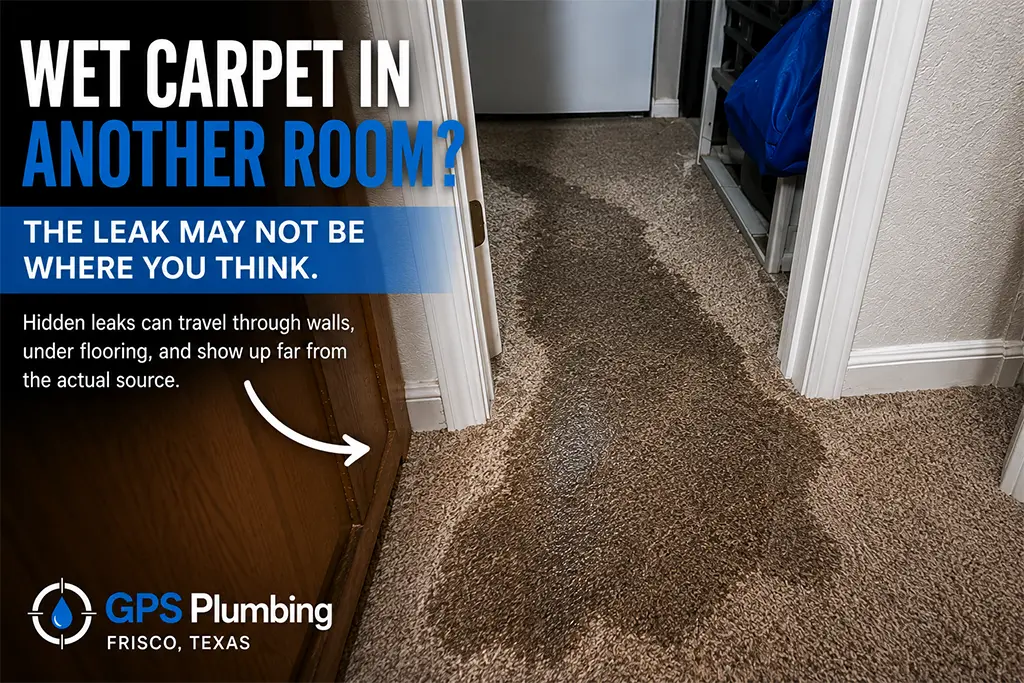
A homeowner in Meadow Hills Estates in Frisco, Texas recently noticed wet carpet forming inside the master closet next to the bathroom, but there were no visible plumbing leaks anywhere in the bathroom itself.
No dripping faucet.
No leaking toilet.
No overflowing tub.
At first glance, nothing appeared wrong.
After a full plumbing inspection, GPS Plumbing traced the moisture issue to a hidden leak coming from the cold-side washing machine shut-off valve located inside the laundry outlet box. Water had been slowly dripping behind the wall and migrating beneath the flooring before finally appearing in the adjacent room.
This is exactly why hidden plumbing leaks can become extremely expensive when they are ignored for too long.
Wet Carpet Does Not Always Mean the Leak Is Nearby
One of the biggest mistakes homeowners make is assuming the leak is directly above or next to the wet area.
Water travels. In many North Texas homes, moisture can easily follow:
- Wall cavities
- Slab edges
- Flooring transitions
- Pipe penetrations
- Framing tracks
- Insulation paths
By the time the water becomes visible, the actual leak may be several feet away. In this case, the wet carpet in the master closet was only the symptom. The real problem was a leaking laundry shut-off valve hidden inside the washing machine outlet box.
Real Hidden Leak Diagnosis in Meadow Hills Estates, Frisco TX
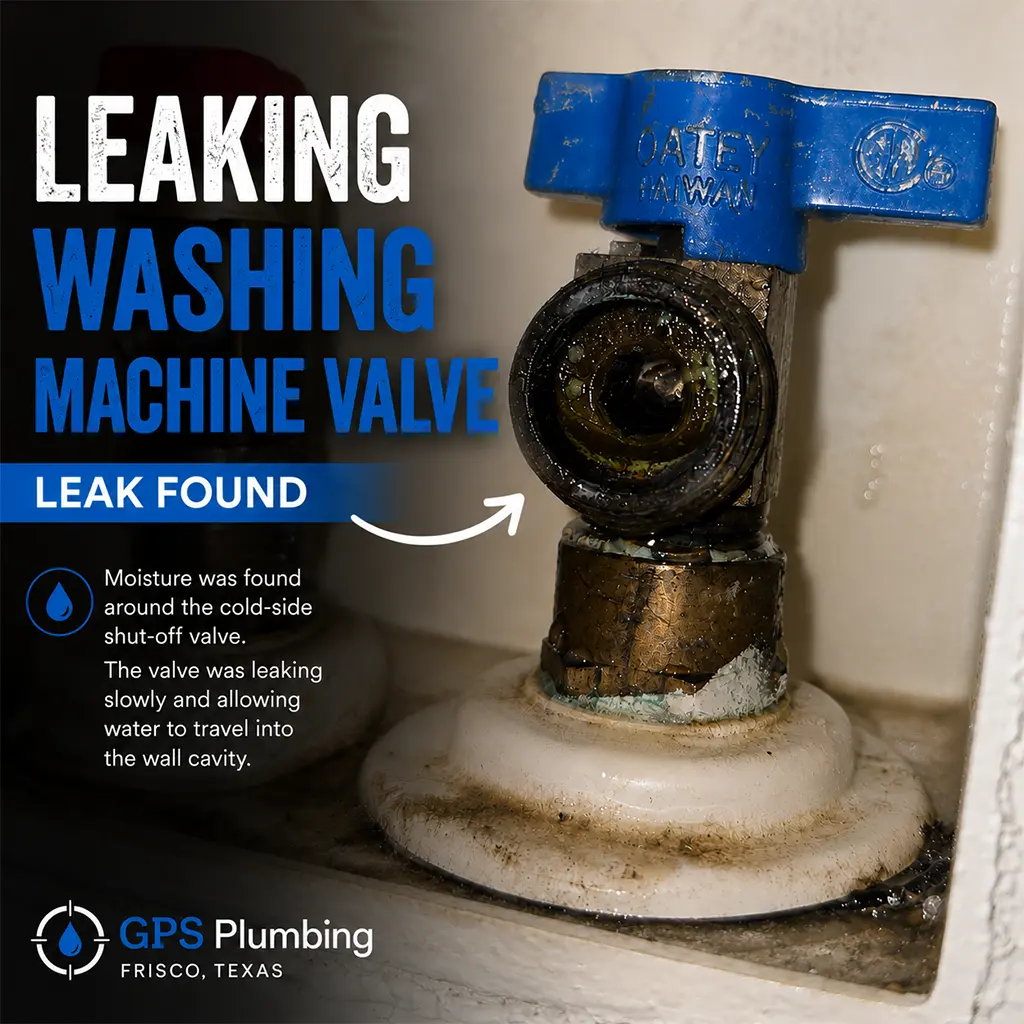
Once GPS Plumbing inspected the laundry area, moisture was immediately visible around the cold-side shut-off valve. The valve had begun leaking around the internal connection point, allowing water to slowly drip down the piping and into the wall cavity.
The leak developed slowly, so the homeowner did not initially notice active dripping. Instead, the first warning sign became wet flooring in the adjacent room.
This is incredibly common with slow plumbing leaks. Homeowners often discover these secondary signs before they ever locate the actual source:
- Soft or spongy flooring
- Damp carpet or rugs
- Swollen baseboards or warped trim
- Musty or mildew smells
- Damp sheetrock
- Unexpected moisture near walls or closets
High Water Pressure Can Contribute to Plumbing Failures
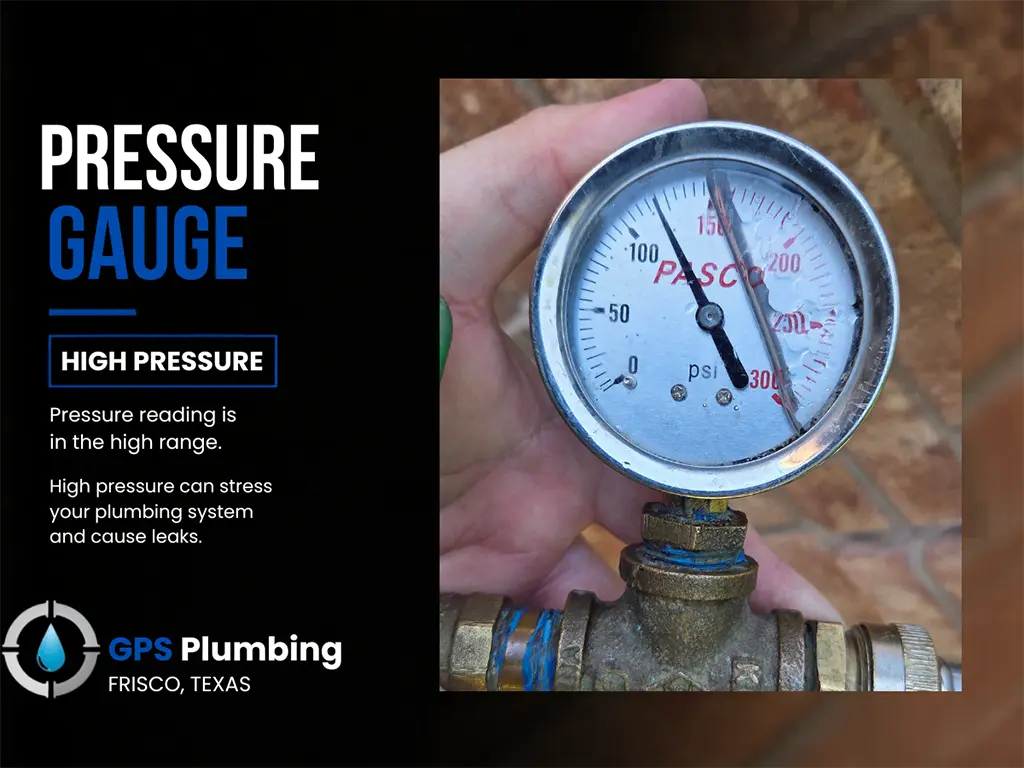
During the inspection, water pressure testing was also performed. Excessively high water pressure places additional stress on the home’s plumbing system, including:
- Washing machine shut-off valves
- Angle stops and supply lines
- Faucet cartridges
- Water heaters
- Toilet fill valves
Over time, high pressure accelerates wear and tear on plumbing components and can contribute to hidden plumbing leaks throughout the home.
➡️ Learn More: Pressure Reducing Valve (PRV): Essential Guide
➡️ External Resource: EPA WaterSense Leak Information
Washing Machine Shut-Off Valves Are Often Overlooked
Laundry shut-off valves are one of the most commonly ignored plumbing components in residential homes. Because they are hidden behind the washing machine, many homeowners never inspect them until visible damage occurs.
Over time, they can develop:
- Corrosion and mineral buildup
- Internal seal failure
- Slow hidden drips
- Weakened packing connections
If your home has unexplained wet flooring, musty smells, damp sheetrock, or a sudden spike in your water bill, the washing machine shut-off valves should absolutely be inspected.
The Repair Process
Our plumbers replaced the failing washing machine shut-off valves and secured the plumbing connections to restore leak-free operation.
After repairs were completed, the plumbing system was pressure tested to help verify proper operation and confirm the leak had been resolved.
Because the leak was caught before major structural damage occurred, the homeowner avoided significantly more expensive restoration repairs.
Hidden Leaks Should Never Be Ignored
Small plumbing leaks rarely stay small.
Even a slow drip behind a wall can eventually lead to:
- Flooring damage
- Mold growth
- Drywall deterioration
- Cabinet damage
- Baseboard swelling
- Costly restoration work
The earlier a hidden leak is identified, the better the outcome usually is for the home and the homeowner’s budget.
If you notice:
- Wet carpet
- Damp flooring
- Musty odors
- Water stains
- Unexplained moisture
It is important to have the plumbing system properly inspected before the problem spreads further.
Water Damage Restoration After a Plumbing Leak
Even a slow plumbing leak can lead to damaged flooring, baseboards, drywall, and possible mold growth if moisture is left untreated.
After repairing the plumbing issue, homeowners may also need professional drying and restoration services to help prevent long-term damage.
GPS Plumbing often recommends TWM Restoration for water damage restoration and structural drying services in North Texas.
Their team specializes in:
- Water extraction
- Structural drying
- Moisture detection
- Flood damage cleanup
- Mold remediation support
- Flooring and drywall restoration
Hidden plumbing leaks can cause major damage if ignored. In some situations, professional drying and restoration services may also be necessary after the plumbing repair is completed.
How Long Do Washing Machine Shut-Off Valves Usually Last?
Most washing machine shut-off valves last around 10 to 20 years, but their lifespan can vary significantly depending on:
- Water pressure
- Hard water and mineral buildup
- Frequency of use
- Installation quality
- Corrosion exposure
- Age of the plumbing system
In North Texas, hard water and high water pressure are two of the biggest reasons these valves fail prematurely. Mineral buildup can slowly damage the internal components of the valve over time, and excessive water pressure places constant stress on seals, connections, and moving parts.
Homes operating around 90 to 100+ PSI often experience plumbing leaks and valve failures much sooner than homes maintained within a safer pressure range of approximately 60 to 75 PSI.
Because washing machine shut-off valves are hidden behind the appliance, many homeowners do not notice a slow leak until damage has already spread into nearby rooms or flooring.
Common warning signs include:
- Wet carpet
- Damp baseboards
- Musty or moldy smells
- Water beneath flooring
- Sheetrock damage in nearby rooms
Even a small drip can eventually lead to expensive water damage if left unresolved.
Frequently Asked Questions
Why is my carpet wet if there is no leak visible in the bathroom?
Can a washing machine shut-off valve leak slowly?
Does high water pressure damage plumbing?
What is considered high water pressure in a home?
- Under 50 PSI = low pressure
- 60 to 75 PSI = ideal residential pressure
- Above 80 PSI = excessively high
- 90 to 100+ PSI = damaging to plumbing systems over time
Can hard water shorten the lifespan of shut-off valves?
What are signs of a hidden plumbing leak?
- Wet carpet
- Damp flooring
- Warped baseboards
- Musty odors
- Mold or mildew smells
- Unexpected increases in the water bill