

How High Water Pressure Causes Leaks in Your Home
In this Frisco home, we were called out for leaking shower trim and faucet handles. At first glance, it looked like worn components. But when multiple fixtures begin leaking around the same time, that usually indicates a larger system issue.
After testing the home's water pressure, we found the real cause: 100 PSI. Take a look at the video for the whole story!
The Hidden Problem: 100 PSI Water Pressure
For residential plumbing systems, that is too high.
Most homes should operate within these general ranges:
- Under 50 PSI: considered low pressure
- Under 75 PSI: good operating pressure
- Above 80 PSI: excessive and potentially damaging
High water pressure places constant stress on:
- Shower cartridges
- Faucet stems and seals
- Toilet fill valves
- Water heater connections
- Supply lines
- Angle stops
Over time, excessive pressure leads to premature wear and recurring leaks throughout the home.
Step 1: Confirming the Symptoms
We began by checking the reported issues:
- Shower leaking at trim
- Faucet handles slowly weeping
- Signs of pressure stress at multiple fixtures
When more than one fixture shows symptoms at once, it’s rarely coincidence. Plumbing systems operate as a whole and pressure affects everything connected to it.
Step 2: Testing the Home’s Water Pressure
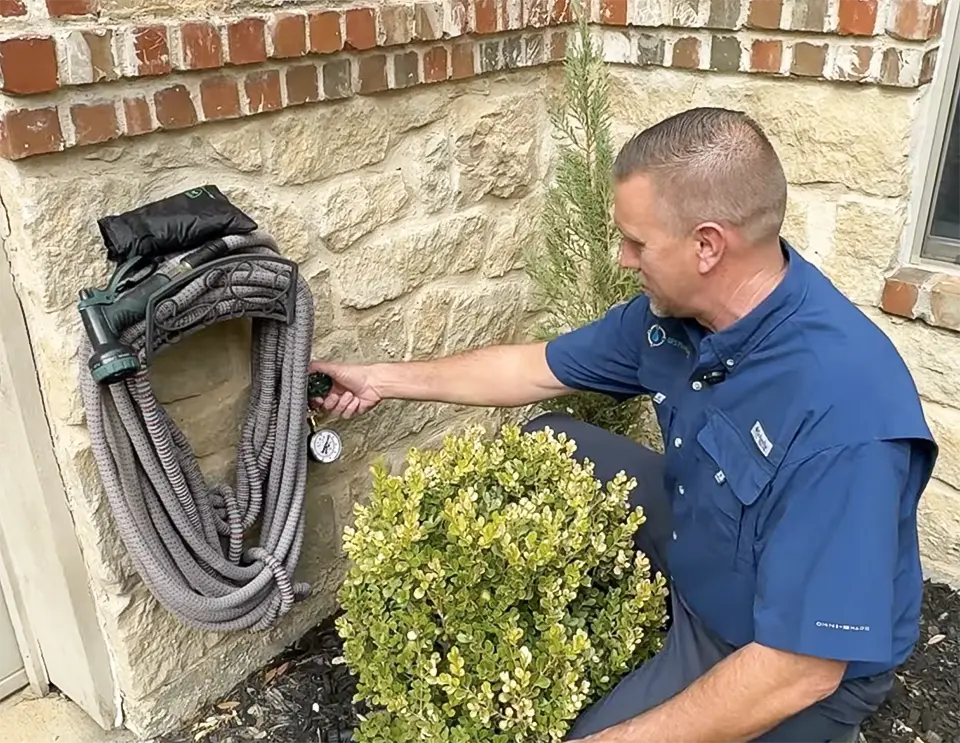
Using a pressure gauge on the hose bib, we tested the incoming water supply and confirmed a reading of 100 PSI.
In growing areas like Frisco and North Dallas, municipal water pressure can run high to serve expanding neighborhoods. However, homes are not designed to operate at sustained levels above 80 PSI.
According to the U.S. Environmental Protection Agency [source], maintaining safe water pressure levels helps reduce plumbing leaks and unnecessary stress on your home’s pipes and fixtures.
Step 3: Inspecting the Pressure Reducing Valve (PRV)
A pressure reducing valve (PRV) regulates incoming city water pressure before it enters your home.
In this case, the PRV had failed.
When a PRV stops functioning properly, your plumbing system receives full municipal pressure which can fluctuate and spike. That pressure travels through every pipe, valve, and appliance in the home.
If you want a deeper explanation of how PRVs work and how to spot failure signs, you can click here to read our guide on Pressure Reducing Valves (PRVs).
Step 4: Replacing the PRV and Main Shutoff Valve
To correct the issue, we replaced:
- The failing pressure reducing valve
- The main water shutoff valve
When system components are aging, replacing both at the same time ensures:
- Reliable pressure regulation
- Proper emergency shutoff capability
- Long-term system protection
This approach prevents repeat issues and protects the plumbing system moving forward.
Step 5: Retesting After Installation
After installation, we tested the pressure again.
The home was restored to a safe operating range, protecting:
- Faucets
- Toilets
- Shower valves
- Water heater connections
- Supply lines throughout the home
Proper pressure isn’t just about comfort. It’s about protecting your plumbing investment.
Why High Water Pressure Is Common in Frisco & North Dallas
In fast-growing communities, municipal water systems often run at higher pressures to maintain service across expanding neighborhoods.
When combined with:
- Hard water
- Texas temperature swings
- Attic-installed water heaters
- Slab foundations
High pressure accelerates wear significantly.
It is also a common contributor to:
- Running toilets
- Frequent faucet repairs
- Water heater leaks
- Slab leaks
- Expansion tank failures
If you notice unexplained leaks or repeated repairs, water pressure should be tested before replacing parts again.
You may also want to click here to review our information on slab leak detection if you notice foundation moisture or sudden pressure loss.
Signs Your Home May Have Excessive Water Pressure
- Multiple fixtures leaking at once
- Toilet fill valves failing repeatedly
- Pipes banging when fixtures shut off
- Water heater leaks without obvious cause
- Dripping faucets that return shortly after repair
If problems continue after repairs, pressure may be the root cause.
Prevention vs Reaction
Emergency plumbing calls address the symptom. Pressure regulation addresses the cause.
A properly functioning PRV protects:
- Fixtures
- Appliances
- Water heaters
- Underground plumbing lines
The U.S. Department of Energy notes that maintaining proper system conditions helps extend equipment lifespan including water heaters that are sensitive to pressure fluctuations.
Final Thoughts
In this Frisco home, the shower leak wasn’t just a worn cartridge.
It was 100 PSI slowly stressing the entire plumbing system.
High water pressure is one of the most overlooked causes of recurring leaks. The good news is that it’s measurable and it’s fixable.
If you live in Frisco or surrounding North Dallas areas and suspect pressure issues, testing your system now can prevent larger plumbing failures later. Every home’s plumbing system is different, so pressure levels and repair recommendations should always be evaluated by a licensed plumber.