

Gas Leak Repair At A Pool Heater In Stonewater Crossing - Frisco, TX
When a pool company reports a possible gas leak, it's not something homeowners should ignore. Gas leaks can affect the performance of your pool heater and, more importantly, create a safety concern for your family and property.
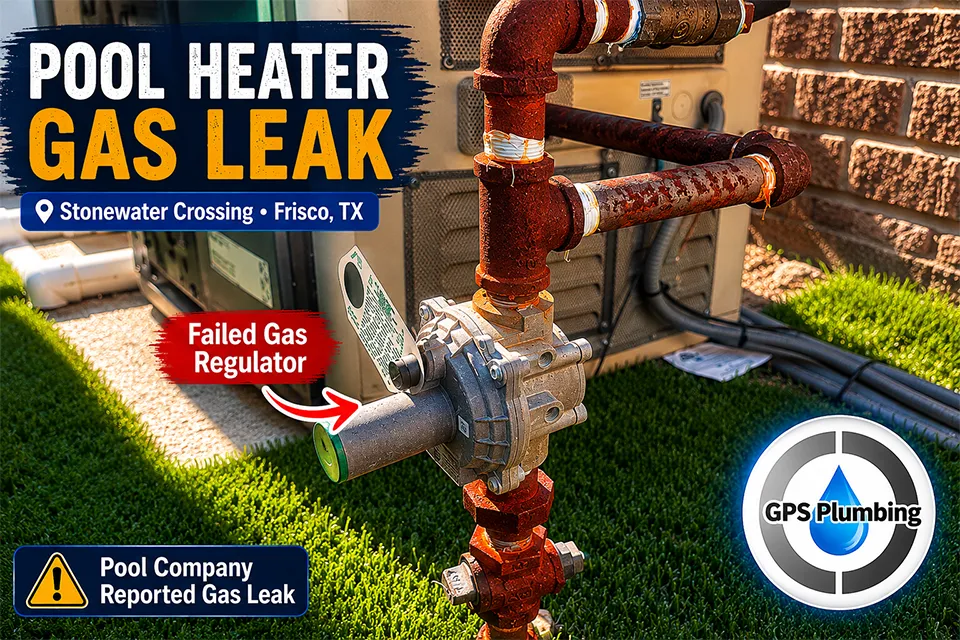
Recently, GPS Plumbing was called to a home in Stonewater Crossing in Frisco, TX 75036 after a pool company detected what appeared to be a gas leak near the pool heater. Our team inspected the gas piping and regulator assembly to determine the source of the issue and recommend the appropriate repair.
INVESTIGATING A REPORTED GAS LEAK AT A POOL HEATER
Pool heaters rely on proper gas pressure to operate safely and efficiently. One of the most important components in that system is the gas regulator. The regulator controls gas pressure and helps ensure the heater receives the correct amount of fuel.
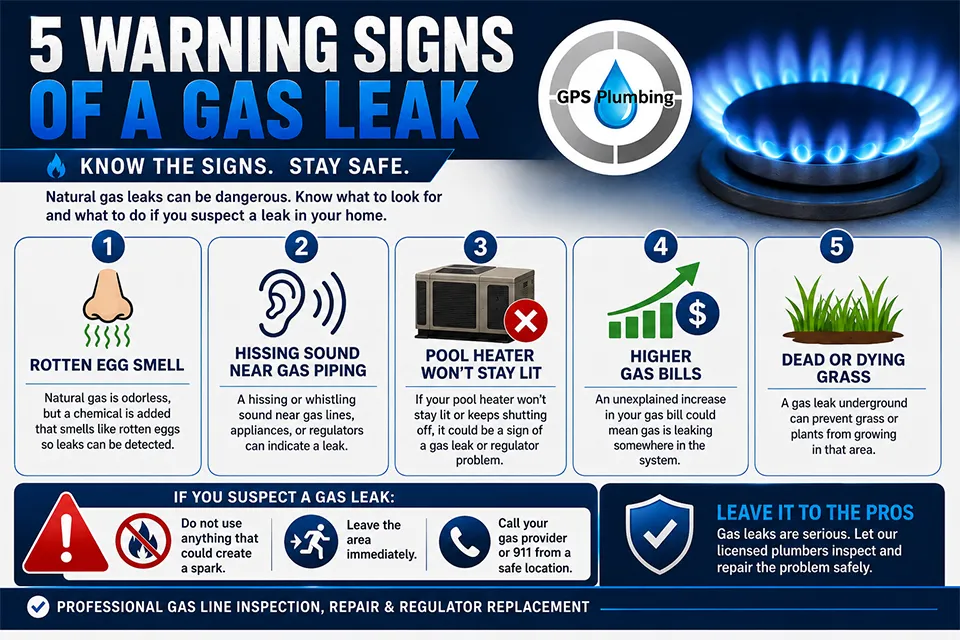
When gas-related issues occur, homeowners may experience:
- Gas odors near the pool equipment
- A faint hissing sound around the regulator or gas piping
- Pool heater ignition problems
- Heater shutdowns or fault codes
- Inconsistent heating performance
- Reduced pool heater efficiency
Because natural gas systems operate under pressure, any reported leak should be inspected promptly by a qualified plumber. If you smell gas and suspect an immediate emergency, always vacate the area and contact emergency services or the Atmos Energy Gas Emergency Line from a safe distance.
Understanding External vs. Internal Gas Leaks
When dealing with a gas issue at a pool heater, the source typically falls into one of two categories.
External Gas Leaks
External leaks occur outside the heater cabinet within the gas delivery system. Common causes include:
- A failing gas regulator, often due to a worn internal rubber diaphragm
- Leaking threaded pipe connections or degraded pipe sealant
Internal Gas Leaks
Internal leaks happen inside the heater unit itself. This typically involves components housed within the metal cabinet, such as:
- A faulty internal gas control valve that fails to close completely
- A cracked burner assembly allowing unburned gas to seep inside the unit
The Repair
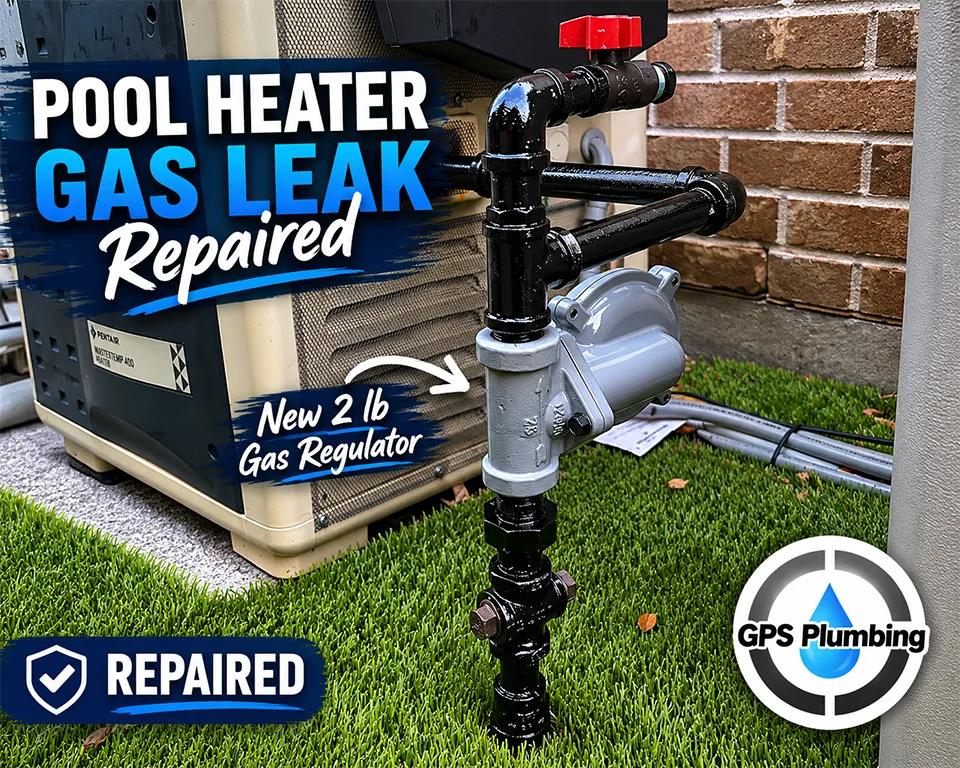
After our inspection, our team determined that the existing gas regulator had failed externally and needed to be replaced. We safely removed the old component and installed a new 2 lb gas regulator specifically designed for this pool heater system.
The full repair included:
- Comprehensive inspection of the gas piping system
- Safe removal and disposal of the faulty regulator
- Installation of the new 2 lb gas regulator
- Thorough testing of all gas connections to ensure a perfect seal
- Verification of proper gas pressure downstream
- Operational testing of the pool heater to confirm it fired up safely
By addressing the issue promptly, we were able to restore full, safe functionality to the homeowner's pool equipment just in time for swimming season.
Frequently Asked Questions
Why does a pool heater need a gas regulator?
How do I know if my pool heater gas regulator is failing?
What is the difference between a pool heater water leak and a gas leak?
Can I replace a pool heater gas regulator myself?
CONTACT GPS PLUMBING TODAY
If you suspect a gas issue near your pool equipment or anywhere else around your home, always prioritize safety. Check out our specialized GPS Plumbing Gas Line Repair and Leak Detection Services to see how we keep your home safe, or contact us today at 469-777-0217.