


Failed Hydrostatic Sewer Test & Sewer Camera Inspection in The Trails (Frisco, TX)
When a plumbing leak is hidden underground or beneath a home's foundation, the first step shouldn't be guessing where to dig. Proper testing can help determine which plumbing system is losing water or pressure and where additional investigation should be focused.
At this home in The Trails in Frisco, Texas, GPS Plumbing performed a water pressure test and hydrostatic sewer test to investigate a possible plumbing leak. The water system held pressure, but the sewer system failed its hydrostatic test.
That result led to a follow-up sewer camera inspection, where our plumber documented two possible problem areas requiring further investigation.
Initial Plumbing Leak Testing in Frisco
GPS Plumbing began by testing both the home's water and sewer systems.
These are two different tests because the home's pressurized water lines and non-pressurized sewer/drain lines operate differently.
GPS Plumbing also uses this combination of water pressure and sewer hydrostatic testing when evaluating plumbing associated with foundation movement or repair. You can learn more about our foundation plumbing testing and hydrostatic testing services.
Water Pressure Test: Held at 56 PSI
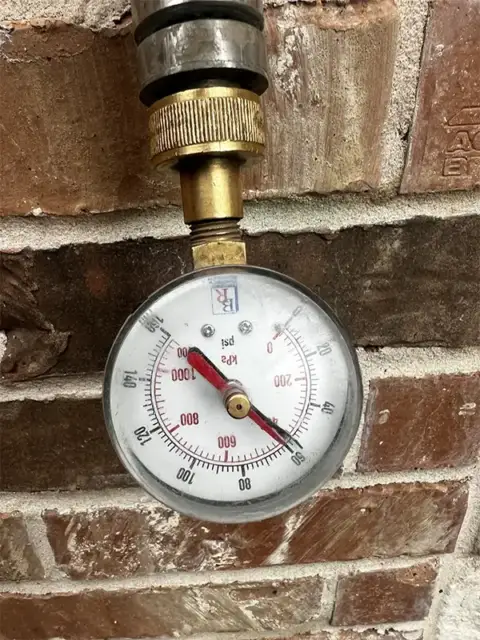
The home's water system was pressure tested and held at 56 PSI during the test.
Because the system maintained the test pressure, the findings did not indicate the same type of pressure loss that was seen during testing of the sewer system.
This distinction was important because it helped direct the next phase of the investigation toward the sewer system rather than simply assuming the home had an underground water-line leak.
Hydrostatic Sewer Test: Failed
The sewer system produced a different result.
During the hydrostatic sewer test, the system could not maintain the water level at the front-yard cleanouts.
The hydrostatic sewer test therefore failed, indicating that the tested sewer system was not holding water as expected and that additional investigation was needed.
During this type of testing, the sewer system is isolated and filled with water so the water level can be monitored. GPS Plumbing's foundation-testing information explains that a drop in the test level can reveal compromised drain piping.
Does a Failed Hydrostatic Test Tell You Where the Leak Is?
No. This is an important distinction.
A failed hydrostatic sewer test can indicate that the tested system isn't holding water properly, but the test alone does not necessarily identify the exact location or cause of the problem.
That is why the next recommendation for this Frisco homeowner was to return for a sewer camera inspection rather than immediately recommending excavation or sewer replacement.
Follow-Up Sewer Camera Inspection
GPS Plumbing returned to the home in The Trails and sent a sewer camera through the line to gather more information.
A professional sewer camera allows the plumber to visually inspect accessible portions of the sewer system and investigate conditions inside the piping.
GPS Plumbing uses sewer camera inspections along with hydrostatic testing and other diagnostic methods when investigating main sewer-line problems. You can read more about our main sewer line diagnostics and repair services.
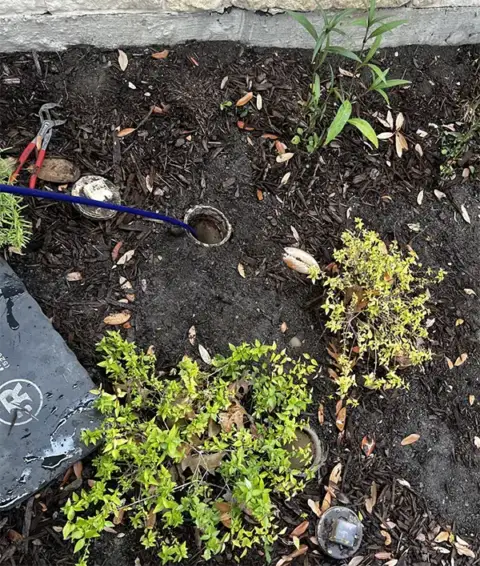
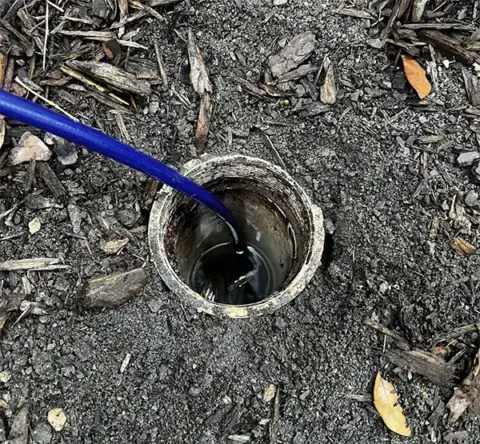
Two Possible Sewer Problem Areas Identified
During the camera inspection, our plumber documented two possible areas of concern.
Possible Problem Area #1: Right Side of the Home
One possible sewer break was identified on the right-hand side of the home, in an area where the homeowner explained that previous sewer repairs had been performed.
The camera had difficulty getting past what appeared to be an older repair in this area.
Because previous work had already been performed there, this finding raised an important question: Could the current problem involve a repair that may still be covered by the previous contractor's warranty?
Possible Problem Area #2: Front Yard
A second possible sewer break was identified in the front yard.
Our plumber marked this location with a flag so the area could be easily identified for follow-up investigation.
This was especially relevant because the original hydrostatic sewer test had been unable to maintain water at the front-yard cleanouts.
Why We're Calling Them “Possible” Sewer Breaks
Although the camera inspection provided important information, we're deliberately describing these as possible sewer breaks rather than confirmed breaks.
The service findings identified two suspicious areas, but additional investigation may still be necessary before determining exactly what has failed and what repair, if any, is appropriate.
That distinction matters.
A sewer camera can provide valuable visual information about the condition of the line, while hydrostatic testing can show that a system isn't holding. Different diagnostic tools provide different pieces of information.
GPS Plumbing's mainline sewer service similarly uses a combination of camera inspection, hydrostatic testing, electronic locating and physical inspection to determine what has failed and where before unnecessary excavation begins.
Previous Sewer Repair May Still Be Under Warranty
Because one of the areas of concern appeared to correspond with previous sewer repair work, GPS Plumbing recommended that the homeowner contact the company that performed the earlier repair and have that work inspected first.
If the previous repair remains under warranty, the original contractor should have an opportunity to evaluate its work.
This can potentially prevent the homeowner from paying another company to investigate or repair something that may already be covered.
What Happens If the Previous Repair Checks Out?
If the previous contractor inspects its work and determines that the earlier repair is intact and isn't causing the failed test, GPS Plumbing can move to the next diagnostic step.
That may involve sewer isolation testing.
Isolation testing allows portions of the drainage system to be evaluated separately. Instead of knowing only that the overall system failed to hold, the diagnostic process can begin narrowing down which section of the sewer system is responsible.
GPS Plumbing can then provide an estimate for the additional diagnostic work if it becomes necessary.
Why Diagnose Before Digging?
This Frisco job demonstrates why underground plumbing diagnostics are often a process rather than a single test.
In this case, the progression was:
- Water pressure test: Held at 56 PSI
- Hydrostatic sewer test: Failed and couldn't maintain water at the front-yard cleanouts
- Sewer camera inspection: Two possible problem areas identified
- Right side of home: Area associated with previous sewer repair
- Front yard: Second possible problem area located and marked with a flag
- Next step: Previous contractor/warranty inspection
- If necessary: Sewer isolation testing to further narrow down the affected section
Each step provides additional information before determining what repair is actually appropriate.
That's preferable to assuming where a sewer line has failed and beginning excavation without enough diagnostic information.
What Is a Hydrostatic Sewer Test?
A hydrostatic sewer test is used to determine whether the tested drainage system can hold water.
The sewer is isolated, water is introduced into the system, and the level is monitored. If the level falls when it should remain stable, additional investigation may be warranted.
GPS Plumbing provides both hydrostatic sewer testing and water-line pressure testing as part of its plumbing diagnostic services.
What Does a Sewer Camera Inspection Show?
A sewer camera provides a view inside accessible portions of a sewer line.
Depending on the condition of the piping, it can help a plumber investigate things such as obstructions, offsets, separated joints, cracks, root intrusion, corrosion or collapsed sections.
But a camera inspection and hydrostatic test answer different questions.
A camera helps us see conditions inside the pipe.
A hydrostatic test helps determine whether the tested sewer system holds water.
In some cases, additional locating or isolation testing is necessary to put all of those pieces together.
Plumbing Codes in Frisco, Texas
The City of Frisco currently lists the 2024 International Plumbing Code with local amendments, effective March 1, 2026, among its adopted construction codes.
Homeowners can review the current requirements directly through the City of Frisco Adopted Codes.
Specific permit, inspection and code requirements depend on the type and scope of plumbing work ultimately performed.
Frequently Asked Questions
Is 56 PSI normal water pressure?
What does it mean when a hydrostatic sewer test fails?
Does a failed hydrostatic test confirm a broken sewer pipe?
Why perform a sewer camera inspection after a failed hydrostatic test?
Did the camera find two sewer breaks at this Frisco home?
Why should the previous plumbing company inspect its work?
What is sewer isolation testing?
Hydrostatic Sewer Testing & Sewer Camera Inspections in Frisco, TX
This job in The Trails in Frisco is a good example of why GPS Plumbing focuses on diagnosing the problem before recommending the repair.
The water system held at 56 PSI, while the hydrostatic sewer test failed because the sewer system couldn't maintain water at the front-yard cleanouts.
The follow-up camera inspection then identified two possible problem areas, one associated with previous repair work on the right side of the home and another in the front yard.
The previous repair should now be evaluated for potential warranty coverage. If that doesn't explain the failed hydrostatic test, sewer isolation testing can be used to continue narrowing down the source.
Homeowners looking for a plumber in the area can also visit our Frisco plumbing services page. GPS Plumbing's site identifies the company as a Frisco-based residential plumbing provider serving Frisco and surrounding communities.