


Cost to Repair a Slab Leak in North Texas
Slab leaks are one of the most complex plumbing issues a homeowner can face. Because they occur beneath your home’s concrete foundation, the method of access, not just the repair itself, is what drives the cost.
In North Texas, including Frisco, Plano, McKinney, Prosper, Allen, Celina, Little Elm, and The Colony, slab leaks are especially common due to expansive clay soil, foundation movement, and elevated water pressure.
Many online estimates significantly understate the true cost of slab leak repairs. The reality is that pricing depends heavily on where the leak is located, how it must be accessed, and the condition of the plumbing system.
What Is a Slab Leak?
A slab leak occurs when a water line beneath your home’s foundation develops a leak. These leaks are typically caused by:
- Expansive clay soil shifting beneath the home
- High water pressure stressing pipes over time
- Corrosion or deterioration of piping
- Foundation movement or repairs
If left unaddressed, slab leaks can lead to:
- Foundation movement or damage
- Flooring issues (warping, cracking, lifting)
- Mold and moisture problems
- Increased water bills
What Does It Cost to Repair a Slab Leak in North Texas?
The cost to repair a slab leak varies widely depending on access and repair method.
The most important distinction is:
👉 Is the leak outside the home, or under the slab inside the home?
Under-Slab Leaks (Interior of the Home)
For slab leaks located beneath the interior of the home, tunneling is often required to access the damaged pipe without cutting through the foundation.
In North Texas, under-slab tunneling typically starts around $3,500 for the initial access, which generally covers the first several feet needed to reach the affected area. From there, costs increase based on:
- Distance to the leak
- Depth of the plumbing system
- Soil conditions, especially clay
- Complexity of the repair
This pricing applies specifically to tunneling beneath the home’s foundation, not yard excavation.
Every home and situation is different. Final pricing depends on access, distance, and site conditions after evaluation.
Yard Leaks (Outside the Foundation)
Leaks located outside the home are typically less complex and do not require tunneling beneath the structure.
These repairs are generally:
- Easier to access
- Less labor-intensive
- Lower in overall cost
Why Tunneling Drives the Cost
Most slab leaks in North Texas occur beneath the interior of the home, not near the perimeter.
To avoid breaking through flooring and the slab, tunneling is required.
This involves:
- Excavating from the exterior of the home
- Digging beneath the foundation
- Advancing toward the exact location of the leak
- Performing repairs in confined conditions
The farther the leak is from the exterior wall, the longer the tunnel must be.
Cost increases based on:
- Tunnel length
- Depth
- Soil conditions
- Accessibility
This is why slab leak pricing varies and why generic online estimates are often inaccurate.
Leak Detection and Diagnosis
Before any repair begins, the leak must be accurately located.
Leak detection typically starts around $250, depending on the methods required.
This may include:
- Pressure testing
- Line isolation
- Acoustic or listening equipment
Accurate detection is critical to avoid unnecessary excavation and added cost.
Repair Methods
Tunneling and Spot Repair
- Most common for interior slab leaks
- Targets the exact failure point
- Avoids breaking the slab
Rerouting the Line
- Used when piping is deteriorated or prone to future leaks
- Installs new piping to bypass the slab
- Often a better long-term solution
Repiping
- Used when multiple failures are present
- Replaces larger portions of the system
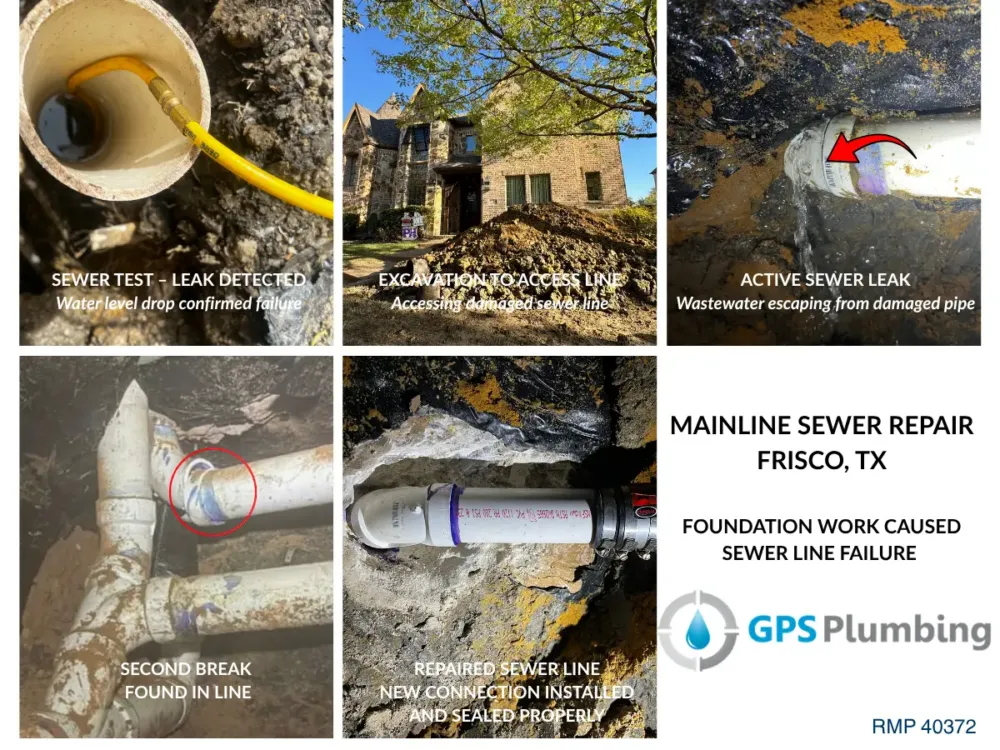
Example: Slab Leak Beneath Interior of Home in Frisco, TX
A recent project in Frisco involved a slab leak located near the center of the home beneath the foundation.
Because the leak was not accessible from the perimeter, tunneling was required.
The pipe had failed following foundation repair, which placed additional stress on the plumbing system, a common issue in North Texas homes.
To access the leak:
- A tunnel was excavated from the exterior
- The tunnel extended beneath the foundation to reach the damaged pipe
- Clay soil conditions required careful excavation
During repair:
- The active leak was exposed
- The damaged section of pipe was removed
- New piping was installed and tested
A reroute was also installed to help prevent future failures in the same area.
This type of repair is common in homes across Frisco, Plano, and McKinney and highlights why access and location significantly impact cost.
Why Hiring a Licensed and Insured Plumber Matters
Slab leak repairs, especially tunneling, are not routine plumbing work.
They involve:
- Structural considerations
- Excavation beneath the foundation
- Installation to current plumbing code
Hiring a licensed and insured plumber ensures:
- Work is completed to code
- Proper materials and sizing are used
- Liability protection for the homeowner
- Accountability for the repair
Unlicensed work can result in improper repairs, repeat leaks, and potential structural damage.
Why Slab Leaks Are Common in North Texas
Homes in Frisco, Plano, McKinney, and surrounding areas are more susceptible due to:
- Expansive clay soil movement
- High municipal water pressure
- Aging copper piping in many neighborhoods
These conditions place continuous stress on plumbing systems beneath the home.
Signs You May Have a Slab Leak
- Sudden increase in water bill
- Low or fluctuating water pressure
- Warm or damp spots on floors
- Cracks in flooring or foundation
- Sound of running water when no fixtures are on
When Should You Take Action?
Slab leaks do not resolve on their own.
Delaying repair can lead to:
- Increased structural damage
- Higher repair costs
- Additional plumbing failures
Early evaluation helps prevent larger issues.
Frequently Asked Questions
How much does it cost to repair a slab leak under a house in Texas?
Why is slab leak repair so expensive?
Is tunneling better than breaking the slab?
Can a slab leak fix itself?
Is leak detection required first?
Does foundation repair cause slab leaks?
Final Thoughts
Slab leak repair is not a one-size-fits-all service. The cost depends on location, access, and the condition of your plumbing system.
In North Texas homes, interior slab leaks often require tunneling, which is a specialized and labor-intensive process. Understanding this upfront helps set realistic expectations.
If you are experiencing signs of a slab leak in Frisco, Plano, McKinney, Prosper, Allen, Celina, Little Elm, or The Colony, contact GPS Plumbing today at 469-777-0217 for accurate diagnosis and straightforward recommendations.